
A new standard for
lithium-ion battery fire safety
Combustible gas control, with high-efficiency continuous-penetration cooling that controls battery thermal-runaway spread
Lithium battery fire-safety lineup
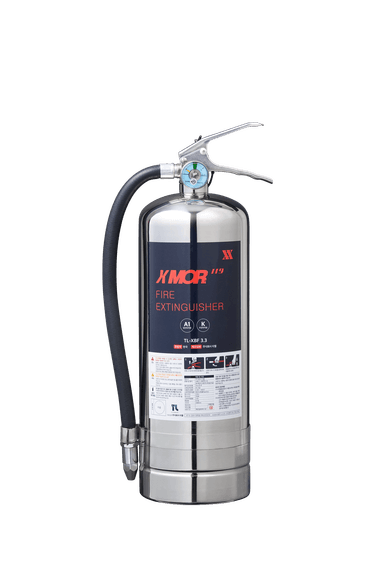
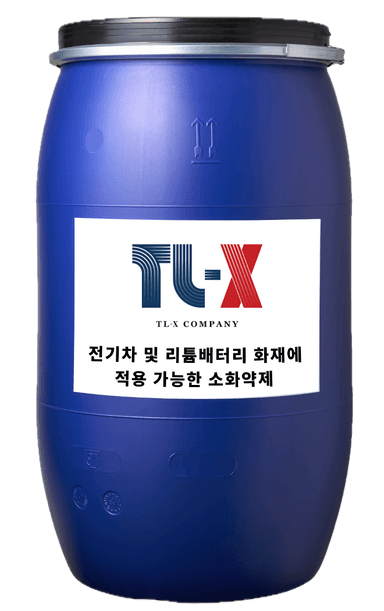

Lithium-ion battery fires are
unlike ordinary fires
Thermal runaway propagation
Runaway in one cell cascades to its neighbors, self-generating heat, combustible gas and oxygen.
Cooling & smothering fall short
Suppressing a single EV fire can take around 30 tonnes of water — hard to keep on standby and deliver in time.
*Based on Company T's EV fire response manual
Persistent re-ignition
Even after suppression, internal reactions can flare up and reignite the fire.
ISO 3941:2026 defines battery fires as ‘Class L’ — they call for a dedicated suppression solution.
Combustible gas control
that stops lithium-ion battery fires
Combustible gas control
Converts combustible gas to non-combustible to suppress the root cause of the fire.
Rapid cooling & propagation cutoff
Operates across a range of temperatures, continuously penetrating inward to cool and block heat transfer to adjacent cells.
PFAS-Free, eco-friendly agent
An eco-friendly agent made without regulated per- and polyfluoroalkyl substances (PFAS) — with zero hazardous substances under RoHS (28) and REACH (253) screening.
Battery suppression performance, backed by data
TL-X in the press
Need to get in touch?
Get a quote or consultation fast. Tell us your application and we'll guide you accordingly.